
Building backlinks remains one of the most challenging aspects of SEO, but ChatGPT is changing how marketers approach link acquisition. ChatGPT can streamline your backlink strategy by automating prospect research, personalizing outreach emails, analyzing competitor link profiles, and generating link-worthy content ideas in a fraction of the time traditional methods require. This artificial intelligence tool from OpenAI doesn’t replace human expertise, but it significantly reduces the manual labor involved in finding opportunities and crafting outreach campaigns.

You’re probably spending hours each week researching guest post opportunities, analyzing competitor backlinks, and writing personalized emails that often go unanswered. ChatGPT addresses these pain points by processing large amounts of data quickly and identifying patterns that would take you days to spot manually. From reverse-engineering your competitors’ link profiles to finding high-engagement Reddit threads where your brand naturally fits, the AI can handle repetitive tasks while you focus on strategy and relationship building.
The key is knowing which link-building tasks to delegate to ChatGPT and which require your judgment. You’ll still need to verify the AI’s suggestions, review outreach emails before sending, and build genuine relationships with site owners. But when used correctly, ChatGPT can increase your efficiency, improve response rates, and help you discover backlink opportunities you might have missed through manual research alone.
Key Takeaways
- ChatGPT automates time-consuming link building tasks like prospect research, competitor analysis, and email personalization while requiring human oversight for quality control
- You can use ChatGPT to identify link opportunities, create anchor text plans, generate linkable content ideas, and craft personalized outreach that improves response rates
- AI tools complement rather than replace link building expertise, working best when combined with strategic thinking and relationship management skills
Understanding ChatGPT’s Role in Modern Link Building
ChatGPT and similar AI tools from OpenAI have shifted how SEO professionals approach link building, offering capabilities that range from research automation to content generation. These large language models can compress hours of manual work into minutes while introducing specific limitations you need to understand.
How AI Tools Transform the Link-Building Landscape
AI tools like ChatGPT fundamentally change link building by automating research-intensive tasks. You can use these systems to identify relevant websites for outreach, analyze competitor backlink profiles, and generate initial outreach templates in seconds rather than hours.
The transformation extends to prospect evaluation. You can prompt ChatGPT to create evaluation criteria based on Google’s Quality Rater Guidelines, helping you assess potential link partners more systematically. This speeds up the qualification process without replacing human judgment.
ChatGPT also assists with strategy development by analyzing your industry and suggesting high-quality targets for backlinks. You can generate topic ideas for link-worthy content, develop broken link building campaigns, and create frameworks for digital PR outreach.
The scalability advantage is significant. Traditional link building requires substantial time for research, prospecting, and communication. Artificial intelligence compresses these timelines, though it cannot fully automate the relationship-building aspects that drive successful campaigns.
Benefits and Limitations of Using Large Language Models
Large language models provide clear advantages for link building workflows. You gain rapid access to strategy templates, tool recommendations, and step-by-step processes without extensive manual research. ChatGPT can interpret complex guidelines and translate them into actionable checklists.
Key benefits include:
- Reduced research time for link building strategies and tools
- Quick generation of outreach email variations
- Assistance with content ideation for linkable assets
- Simplified interpretation of technical SEO guidelines
The limitations are equally important. ChatGPT cannot evaluate actual site quality or verify current backlink data because it lacks real-time internet access. Its training data has cutoff dates, meaning recent algorithm updates or industry changes remain outside its knowledge base.
You’ll also encounter accuracy issues. When asked to provide specific broken links or analyze live websites, ChatGPT often generates plausible but incorrect information. Human verification remains essential for any AI-generated link prospects or technical recommendations.
Key Differences: GPT-3, GPT-3.5, and GPT-4
GPT-3, released by OpenAI in 2020, introduced 175 billion parameters but struggled with consistency for detailed link building tasks. You would receive more generic responses that required significant editing and fact-checking before practical application.
GPT-3.5 improved reasoning capabilities and instruction-following, making it more reliable for generating outreach templates and interpreting multi-step link building processes. The model better understands context when you provide specific examples or frameworks.
GPT-4 represents a substantial advancement in accuracy and nuance. You get more sophisticated analysis of link building scenarios, better adherence to specific tone requirements in outreach content, and improved ability to work with complex prompts involving multiple constraints.
For link building specifically, GPT-4 handles “act as” prompts more effectively, allowing you to request strategies from the perspective of industry experts. It also provides more detailed step-by-step processes when you need actionable implementation guidance rather than general concepts.
Techniques for Generating High-Quality Backlinks with ChatGPT
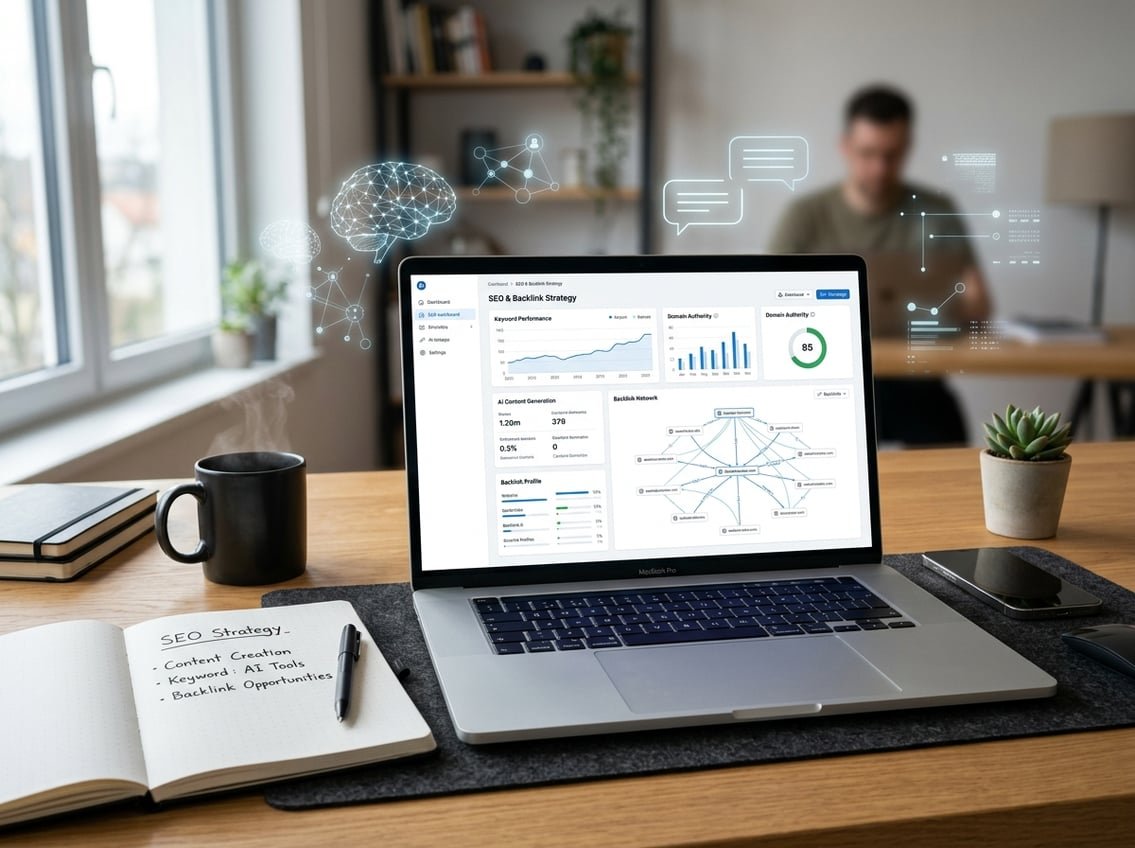
ChatGPT streamlines backlink acquisition by handling repetitive tasks like brainstorming guest post topics, crafting personalized outreach emails, and creating reusable templates that maintain a human touch at scale.
Automating Guest Post Ideation and Pitching
ChatGPT accelerates guest posting by generating topic ideas tailored to specific websites and audiences. You can prompt it to analyze a target site’s existing content and suggest complementary angles that fill content gaps. This ensures your pitch offers genuine value rather than duplicating what already exists.
For pitch creation, provide ChatGPT with details about the target publication, your expertise, and the proposed topic. The tool will draft a guest post pitch that highlights why your contribution matters to their readers. You should refine these drafts by adding specific metrics, case studies, or unique insights that ChatGPT cannot fabricate.
The model can also generate article outlines that demonstrate your planned structure and key points. This shows editors you’ve thought through the execution before they commit. Remember to fact-check all AI-generated claims and replace generic statements with concrete examples from your experience.
Leveraging Personalized Outreach Emails
Personalized outreach emails dramatically improve response rates compared to generic templates. ChatGPT helps you customize messages by incorporating details about the recipient’s recent content, social media activity, or business challenges.
Feed the tool information about the website owner or editor, then ask it to craft an email that references specific articles they’ve published or topics they cover frequently. This shows you’ve done your research rather than sending mass emails. You can provide ChatGPT with a framework that includes the recipient’s name, their site, a relevant article they wrote, and your value proposition.
The key is balancing automation with authenticity. Use ChatGPT to handle the structure and initial personalization, but add your own voice and genuine observations. Avoid obvious AI patterns like excessive formality or overly elaborate praise that sounds insincere.
Creating Effective Outreach Templates and Follow-Ups
Outreach templates save time while maintaining consistency across your link-building strategy. ChatGPT creates modular templates with customizable sections for different scenarios—initial contact, follow-up, rejection handling, or relationship nurturing.
Your templates should include variable fields for personalization points like [RECIPIENT_NAME], [THEIR_ARTICLE_TITLE], or [SPECIFIC_COMPLIMENT]. ChatGPT can generate multiple variations of each template to prevent your outreach from sounding repetitive if you contact multiple people at the same publication.
For follow-ups, timing and tone matter significantly. Ask ChatGPT to create a sequence of 2-3 follow-up messages with escalating urgency but maintained politeness. The first follow-up might simply resurface your original pitch, while the second could offer an alternative angle or mention a time-sensitive news hook that makes your content more relevant. Test different subject lines and opening sentences to identify which variations generate better response rates.
Content Creation and Link Magnet Development

ChatGPT can generate content ideas and develop linkable assets that naturally attract backlinks from authoritative sites. The tool helps you create original content ranging from data-driven reports to interactive resources while maintaining quality standards that make other websites want to reference your work.
Generating Linkable Assets and Original Content
Linkable assets are content pieces specifically designed to earn backlinks because they provide unique value. You can use ChatGPT to create various formats including whitepapers, case studies, and resource pages that other websites cite as references.
Start by identifying gaps in your niche that competitors haven’t addressed. ChatGPT can analyze your industry and suggest original content angles that fill these information voids. For example, if you run a marketing site, you might request ideas for benchmark reports or statistical analyses.
The key is creating content that doesn’t exist elsewhere. While ChatGPT generates the framework, you need to add proprietary data, original research, or unique insights. This combination produces ai-generated content that serves as a foundation while maintaining authenticity.
Consider developing expert roundups where you compile insights from industry leaders. ChatGPT can draft interview questions and organize responses into publishable formats. You can also create comprehensive guides or interactive tools that become go-to resources in your field.
Brainstorming Link Magnet Ideas
Link magnet ideas should align with what your target audience needs and what linking sites value. ChatGPT excels at generating content ideas tailored to your specific niche and audience preferences.
Ask ChatGPT to suggest link magnets based on your website focus and preferred content format. Specify whether you want visual content like infographics, written resources like guides, or interactive elements like calculators. The more details you provide about your audience and goals, the more relevant the suggestions.
You can request ideas for podcasts, video series, or data visualizations depending on your content creation capabilities. ChatGPT will propose topics that match current industry trends and address common pain points your audience faces.
Using AI to Optimize Content Quality
Content quality determines whether other sites will link to your work. ChatGPT helps refine ai content to meet professional standards that earn citations and backlinks.
Use the tool to improve structure, clarity, and depth of your content. Request specific sections like FAQ segments, statistical breakdowns, or methodology explanations that add credibility. ChatGPT can expand thin sections and suggest additional subtopics that make your content more comprehensive.
Review ai-generated content carefully and add human expertise. Insert real data, verify claims, and ensure accuracy before publication. The goal is using ChatGPT for content generation efficiency while maintaining the authoritative tone that makes other websites trust and link to your resources.
Keyword Research and Anchor Text Planning
Strategic keyword research forms the foundation of effective backlink campaigns, helping you identify target terms and create natural anchor text variations. You’ll need to balance search volume with keyword difficulty while developing diverse anchor text that supports your SEO-optimized content.
Expanding Seed Keywords and Keyword Ideas
You can use ChatGPT to generate initial keyword ideas by providing seed keywords related to your backlink targets. Input a prompt like “Generate keyword variations for [your topic]” to receive related terms and long-tail keywords.
ChatGPT excels at brainstorming semantically related terms you might not consider. Ask it to identify LSI keywords or create keyword clusters based on semantic relevance to organize your research.
The tool helps you discover content angles for link-worthy assets. Request topic variations, question-based keywords, or specific keyword types that align with your content outlines.
Keep in mind that ChatGPT’s training data has limitations. You should verify suggestions against actual search data using dedicated SEO tools before finalizing your keyword list.
Analyzing Search Volume and Keyword Difficulty
ChatGPT cannot provide accurate search volume or keyword difficulty metrics on its own. The base version lacks access to real-time search data needed for this analysis.
You must combine ChatGPT’s keyword ideas with tools like Semrush or Ahrefs to validate each term’s potential. Export ChatGPT’s suggestions and cross-reference them against keyword metrics in your preferred SEO platform.
Some zero-volume keywords ChatGPT suggests may actually receive significant searches but lack sufficient data in keyword tools. These terms can still be valuable for niche backlink opportunities.
Focus on identifying long-tail keywords with moderate difficulty scores for your backlink anchor text. These typically face less competition while maintaining relevance to your target pages.
Developing an Anchor Text Strategy
Your anchor text strategy needs variety to appear natural to search engines. ChatGPT can help you create diverse anchor text variations including exact match, partial match, branded, and generic phrases.
Provide ChatGPT with your target keywords and ask it to generate 20-30 natural anchor text variations. This ensures you’re not over-optimizing with repetitive exact-match anchors.
Create a distribution plan that includes:
- Exact match: 5-10% of total anchors
- Partial match: 15-20% of total anchors
- Branded: 30-40% of total anchors
- Generic/naked URLs: 25-35% of total anchors
You can also ask ChatGPT to suggest contextual phrases that naturally incorporate your keywords. This produces anchor text that fits organically within content while maintaining SEO value.
Competitor and Backlink Profile Analysis with AI
AI tools transform how you analyze competitor backlink profiles by automating data collection and identifying patterns that would take hours to uncover manually. These systems evaluate thousands of backlinks simultaneously, filtering out low-quality links while highlighting strategic opportunities for your own link-building campaigns.
Uncovering Competitor Backlinks for New Opportunities
AI-powered tools scan competitor domains to build comprehensive backlink profiles that reveal where your competitors are gaining authority. You can identify which websites link to multiple competitors but not to your site, creating immediate outreach targets.
The technology analyzes linking patterns across your industry to surface niche-specific directories, resource pages, and authoritative blogs. When you examine these competitor backlinks, AI categorizes them by domain authority, topical relevance, and link placement to prioritize your outreach efforts.
You’ll discover guest posting opportunities on sites that already accept content in your niche. AI detection also reveals successful content formats that attract backlinks, allowing you to replicate what works. This approach gives you a data-driven blueprint for building links rather than guessing which sites might accept your pitches.
Evaluating Backlink Profiles for Strategic Decisions
AI evaluates backlink quality by examining multiple factors including domain authority, spam scores, anchor text distribution, and contextual relevance. You gain insights into whether competitor backlink profiles rely on genuine editorial links or manipulative tactics.
The analysis identifies linking root domains, showing you the diversity of a competitor’s backlink sources. A profile with many links from few domains signals lower quality than one with varied, authoritative sources.
- Domain and page authority scores
- Link velocity and growth patterns
- Anchor text ratios (branded, exact match, partial match)
- Link placement (footer, sidebar, in-content)
- Toxic link detection and spam signals
You can benchmark your backlink profile against competitors to identify gaps in your link-building strategy. AI flags harmful links that might trigger penalties, helping you maintain a clean profile while pursuing aggressive growth.
Identifying Broken Link Building and Niche Edits
AI crawlers detect broken links on resource pages and industry websites where your content could serve as a replacement. You receive notifications when relevant pages develop 404 errors, creating time-sensitive outreach opportunities before competitors notice.
The technology identifies pages already linking to similar content where you could request link insertions or niche edits. These placements on existing content often have higher success rates than cold outreach because the page already covers your topic.
AI analyzes which types of resources get linked most frequently in your niche, whether that’s tools, statistics, or how-to guides. You can then create linkable assets that match proven formats. The system also monitors when competitors lose backlinks, allowing you to contact those sites and offer your content as an alternative.
Advanced Strategies and Future Outlook for AI-Driven SEO
Building backlinks for ChatGPT and AI search visibility requires different tactics than traditional SEO, with emphasis on establishing authority through strategic partnerships and adapting to platforms like Perplexity that prioritize user-generated content and structured data.
Harnessing Influencer Marketing and Industry Events
Influencer marketing creates natural citation opportunities in AI-driven search results. When industry experts reference your content, AI platforms interpret these mentions as authority signals distinct from traditional backlinks.
Partner with influencers who produce comparative content and technical analyses. AI search engines favor listicle formats and expert roundups where your brand appears alongside competitors. Focus on influencers active on platforms ChatGPT and Perplexity frequently cite, particularly LinkedIn and industry-specific forums.
Industry events generate multi-format content that AI systems index differently. Speaking engagements, panel discussions, and event coverage create video transcripts, social media posts, and blog mentions. These diverse content types increase your chances of citation across different AI platforms.
Document your event participation with structured data. Use semantic URLs and detailed meta descriptions that specify your role, topic, and key insights. AI crawlers parse this information to establish topical authority even without traditional backlink metrics.
Utilizing Directories and Resource Pages
Directories and resource pages serve as structured data sources that AI systems trust. Unlike traditional SERPs where directory listings provide minimal SEO value, AI platforms frequently cite well-maintained directories as authoritative references.
Submit your content to industry-specific directories that align with ChatGPT’s preference for established sources. Use SEO tools like Semrush to identify directories with strong topical relevance rather than high domain authority. AI search optimization prioritizes semantic alignment over traditional ranking metrics.
Resource pages offering comparative information receive disproportionate citations in AI search results. Create resource pages that directly answer common industry questions. Structure these pages with clear headings, tables comparing solutions, and metadata that explicitly states the information covered.
Monitor which directories AI platforms cite for your target queries using data analysis tools. Track citation patterns across ChatGPT, Perplexity, and Google AI Overviews to identify the most valuable directory placements.
The Future Role of AI in Link-Building Efforts
AI tools are transforming link-building from manual outreach to strategic content optimization. Future link-building will focus less on acquiring backlinks and more on creating content that AI systems confidently cite regardless of traditional authority signals.
The llms.txt file represents the future of technical optimization. This standard allows you to communicate directly with AI crawlers about your site structure, priority content, and topical expertise. Implementing comprehensive llms.txt files will become as fundamental as robots.txt for traditional search.
AI platforms show minimal overlap with traditional SERPs—ChatGPT results overlap only 12% with Google. This decoupling means you must optimize separately for AI visibility rather than assuming strong Google rankings translate to AI citations.
Industry reports indicate AI search engines favor recent content on scales of days rather than months. This recency bias requires continuous content updates and real-time monitoring of AI citation patterns. Tools that track AI search visibility will become essential for measuring success beyond traditional backlink profiles.
Frequently Asked Questions
Building backlinks with AI assistance raises practical questions about quality, safety, and compliance. The answers below address common concerns about using tools like ChatGPT for link-building while maintaining ethical SEO practices.
How can I create high-quality backlinks for free without risking penalties?
You can obtain quality backlinks through organic strategies that focus on creating valuable content worth linking to. Guest posting on relevant industry blogs, creating original research or data studies, and developing useful resources like templates or guides naturally attract links without payment.
Building relationships with other site owners in your niche creates opportunities for mutual linking arrangements. You should focus on relevance and authority rather than quantity when pursuing backlinks.
Directory submissions to reputable, niche-specific directories provide another free option. Avoid link schemes, excessive reciprocal linking, or any tactics that manipulate PageRank, as these violate search engine guidelines and can result in penalties.
What are the safest ways to use AI tools to support link-building efforts?
AI tools work best for research, analysis, and content creation tasks rather than automated link placement. You can use ChatGPT to identify potential link opportunities, analyze competitor backlink profiles, and generate content ideas that attract natural links.
Using AI to draft outreach emails saves time while allowing you to personalize each message before sending. The key is maintaining human oversight and decision-making throughout the process.
You should never use AI to automatically create backlinks or post content across multiple sites without review. Keep AI as an assistant for brainstorming and drafting while you handle relationship building and quality control yourself.
Can AI-generated outreach emails improve backlink acquisition rates?
AI-generated outreach emails can improve your response rates when you properly customize them for each recipient. ChatGPT can help you craft compelling email templates that highlight mutual benefits and demonstrate genuine interest in collaboration.
Your success depends on personalizing AI-generated drafts with specific details about the recipient’s website and content. Generic, obviously automated emails typically receive poor response rates regardless of how well-written they are.
You should use AI to overcome writer’s block and speed up the drafting process, then invest time in tailoring each message. Include specific references to the recipient’s recent content, explain why your content fits their audience, and make your request clear and reasonable.
What criteria should I use to evaluate whether a backlink source is trustworthy?
A trustworthy backlink source demonstrates topical relevance to your industry and maintains high-quality content standards. Check whether the site publishes well-researched articles, has an engaged audience, and covers topics related to your niche.
Domain authority metrics provide useful signals, but you should also examine the site’s traffic patterns and editorial standards. Sites with consistent publishing schedules, professional design, and clear editorial policies typically offer more valuable backlinks.
Red flags include excessive advertising, thin content, unrelated topic mixing, and obvious link selling. You should also check whether the site has received any search engine penalties by searching for the domain name with terms like “penalty” or “manual action.”
Is using AI assistance for SEO tasks compliant with major search engine guidelines?
Using AI tools for research, content creation, and strategy development complies with search engine guidelines when you maintain quality standards. Google and other search engines evaluate content based on helpfulness and quality rather than how you created it.
You must ensure AI-generated content provides genuine value and accuracy before publishing. Search engines penalize low-quality, automatically generated content designed solely to manipulate rankings.
The key compliance factor is whether your content serves users or just attempts to game algorithms. You should edit and fact-check all AI outputs, add your expertise and insights, and ensure the final product meets user needs.
Can AI tools directly access and verify live webpages and backlinks?
Current AI language models like ChatGPT have limited ability to access and verify live webpage data in real-time. While newer versions have internet connectivity, they cannot reliably crawl sites or verify active backlinks like dedicated SEO tools can.
You need specialized backlink analysis tools to check live link status, domain metrics, and indexation. AI can help you interpret this data once you provide it, but cannot replace dedicated SEO software for verification.
ChatGPT works best when you feed it specific data to analyze rather than asking it to gather live metrics. Combine AI assistance with established SEO tools that provide accurate, real-time backlink data and verification.
Pingback: AI Web Tools: Essential Solutions for Modern Web Developers - One URL
Pingback: Get Free Link Juice: Proven Strategies to Boost SEO Authority - One URL
Pingback: Reddit Site Links: Essential Guide to Navigation and Alternatives - One URL
Pingback: TikTok Video Generation How To: A Complete Guide for AI-Powered Content – Bio Link Builder Platforms
Pingback: AI GPT Backlinks: Modern Strategies for Authority and SEO – Bio Link Builder Platforms