
You open Etsy. You refresh stats. A few visits trickle in, usually from your own phone, your partner, or the same social post you shared yesterday. The shop looks good. The products are solid. The photos took hours. But traffic is flat, and without traffic, nothing else matters.
That’s the point where most sellers start chasing random fixes. They rewrite one title, post a Reel, pin a product, maybe turn on ads for a day, then stop when nothing obvious happens. The problem usually isn’t effort. It’s that the effort isn’t connected.
A shop that grows past its first few sales usually runs on a system, not luck. Etsy search brings in buyers already shopping. Social platforms create discovery. Content builds trust. Email brings people back. A bio link page ties those moving parts together so your traffic doesn’t scatter across disconnected posts and platforms.
Table of Contents
- Beyond Hopeful Refreshing Your Introduction to Traffic
- Master Etsy's Internal Search Engine
- Build Your Off-Etsy Social Media Funnel
- Create Content and Community That Sells for You
- Amplify Your Reach with Smart Ads and Collaborations
- Track, Analyze, and Centralize Your Traffic System
Beyond Hopeful Refreshing Your Introduction to Traffic
Most Etsy sellers don’t have a product problem first. They have a visibility problem.
A pattern shows up all the time. A seller launches with decent listings, tells a few friends, gets an early sale or two, then growth stalls. They start asking how to drive traffic to etsy shop pages as if traffic is a single tactic. It isn’t. It’s a stack.
The stack has to work in order. Etsy SEO comes first because it helps buyers already on the platform find you. Social media comes next because it creates discovery outside Etsy. Then you need a way to catch and direct that attention, instead of letting it disappear into a profile feed. Finally, you need a way to measure what brought buyers in.
Practical rule: Don’t send more traffic to weak listings. Fix the foundation first, then scale attention.
Sellers who skip the foundation often get the worst kind of traffic. People click, browse, and leave. That usually happens when the listing promises one thing, the images show another, or the keywords are broad enough to attract the wrong shopper. More traffic doesn’t solve that. It exposes it.
A healthy traffic system does something simpler and more useful. It brings the right person from the right channel to the right listing, then gives that person an easy next step. Sometimes that next step is a purchase. Sometimes it’s an email signup, a profile follow, or a click into your best-seller collection.
Here’s the mental shift that matters. Stop thinking in isolated tips and start thinking in flow.
- Etsy search brings in buyers with intent.
- Pinterest, Instagram, and TikTok create awareness and product discovery.
- Useful content and email help you keep attention instead of renting it.
- A central bio link page turns scattered social activity into a trackable path back to your shop.
That’s the difference between posting constantly and building momentum.
Master Etsy's Internal Search Engine
If your listings aren’t built for search, outside traffic won’t rescue the shop. It will just send more people to pages that aren’t ready to convert.

Start with buyer language
Strong Etsy SEO starts with the phrases buyers type, not the creative names sellers give their products. A buyer searches “sterling silver necklace,” not “Moonlit Tide No. 4.” That distinction matters.
According to Picup Media’s Etsy traffic guide, to rank high in Etsy search, you must optimize listings with primary keywords in titles under 140 characters, all 13 tags, and the first 160 characters of your description. The same guide says sellers using tools like Marmalead for keyword research can see 2-5x traffic growth in 30 days because they can target phrases with high demand but low competition.
That doesn’t mean stuffing the same phrase everywhere. It means choosing a primary phrase for each listing and building the listing around it cleanly.
A practical workflow looks like this:
- Pick one main keyword per listing. Use Marmalead, eHunt, Etsy search suggestions, and your own order history to find phrases buyers already use.
- Add close variations. If the main term is “sterling silver necklace,” related phrases might include gift intent, style, recipient, or occasion.
- Match the product truthfully. Don’t target a term just because it has traffic if your item doesn’t fit it.
Broad keywords bring broad traffic. Specific keywords bring buyers.
Build listings for search and clicks
A listing has to satisfy both the algorithm and the shopper. Those are related, but they aren’t identical.
For Etsy search, the basics are essential:
- Title placement matters. Put the primary keyword near the front so both buyers and search can identify the product fast.
- Use all 13 tags. Tags are wasted space if you leave them half empty or duplicate weak variations.
- Fill categories and attributes accurately. These fields help Etsy understand the item without making the listing look forced.
- Lead with a useful description opening. The first lines should confirm what the product is, who it’s for, and why it’s different.
Here’s a simple comparison:
| Weak listing habit | Better listing habit |
|---|---|
| Cute product name first | Buyer keyword first |
| Repeating one phrase | Covering related search intent |
| Thin opening description | Clear first lines with product details |
| Missing attributes | Fully completed item details |
| Generic tags | Tags tied to use case, style, recipient, or occasion |
The mistake I see most is sellers trying to rank one listing for everything. Etsy works better when each listing owns a clear lane. One listing can target bridal jewelry. Another can target minimalist everyday wear. Another can target birthday gifting. You don’t need one perfect listing. You need a catalog where each listing has a job.
A few title rules help:
- Lead with the searchable phrase.
- Add differentiators naturally. Material, recipient, style, and use case work well.
- Avoid filler words. They take up space without helping discovery.
- Write for mobile first. Buyers often only see the start of the title.
Later in the listing, your description should answer the friction questions fast. What is it made from? What size is it? When would someone buy it? How does it look in real use?
This walkthrough is worth watching if you want a visual primer on tightening your Etsy search setup:
Use visuals to support ranking and conversion
Search gets the click. Images get the sale.
Your lead photo should make the product instantly understandable at thumbnail size. If the buyer has to guess what they’re looking at, the click dies before it starts. For wearables, model shots help. For home goods, lifestyle placement helps. For digital products, clear mockups matter more than decorative clutter.
Use visuals with intent:
- First image should clarify the product immediately.
- Later images should answer objections like scale, color, packaging, and use.
- Video should show movement, texture, handling, or context that photos can’t show as quickly.
A lot of sellers over-edit their photos into a brand mood that weakens clarity. Etsy shoppers aren’t scrolling a fashion magazine. They’re making a decision. Keep the style, but make the product obvious.
One more trade-off matters. Search optimization can raise impressions, but if the images or pricing attract the wrong buyer, conversion suffers. A listing that gets fewer, better clicks is healthier than one that gets lots of low-intent traffic and no orders. Internal traffic works best when the listing promise, photos, and buyer keyword all point to the same item.
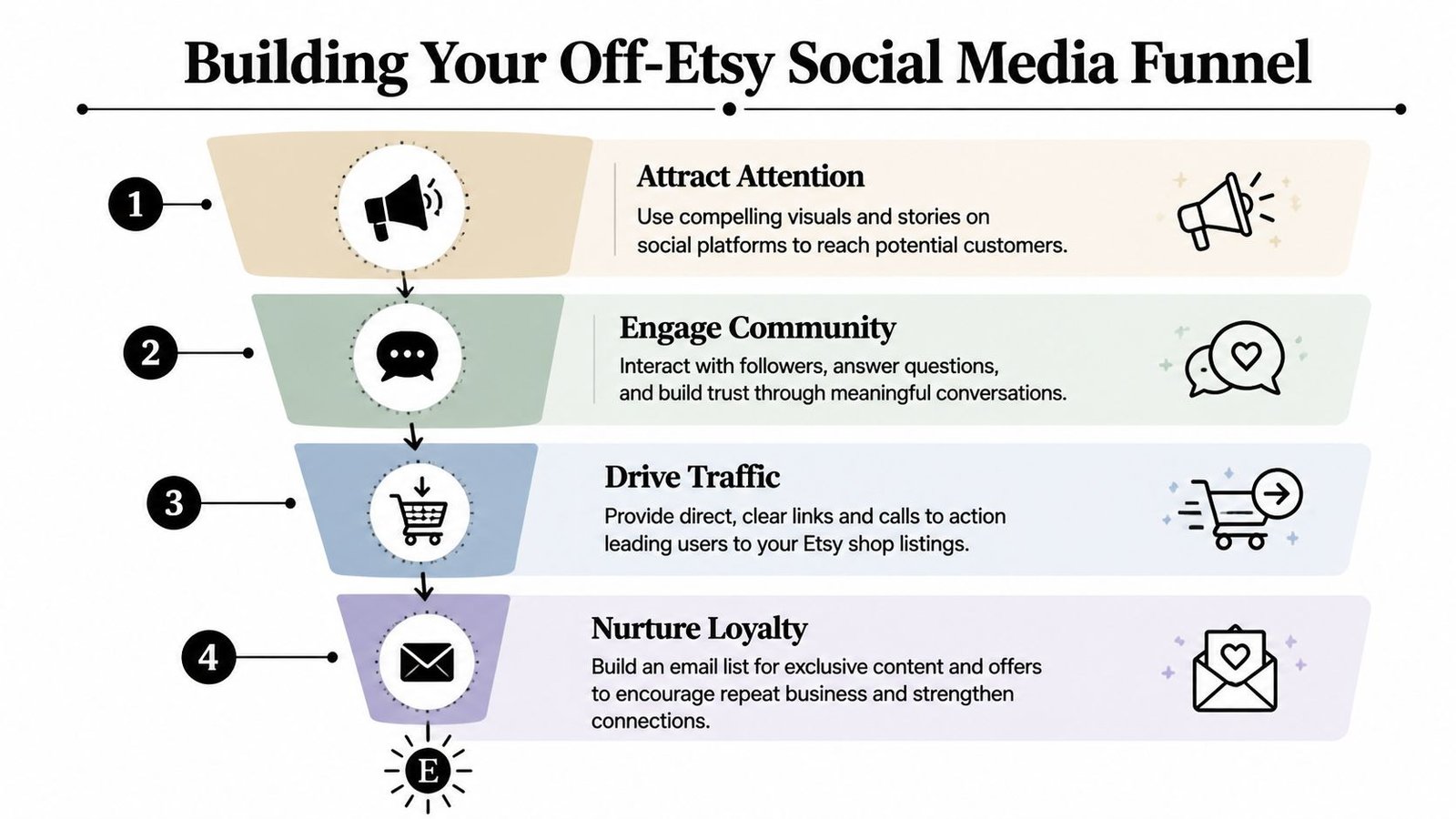
Build Your Off-Etsy Social Media Funnel
Relying only on Etsy search leaves your shop exposed. Search changes, competition changes, and buyer behavior changes. External traffic gives you another lane.
The mistake is treating every platform the same. Pinterest isn’t Instagram. TikTok isn’t Pinterest. Each one needs a different job in your funnel.
Pinterest for long-tail discovery
Pinterest is the quiet workhorse for many visual Etsy shops. Unlike short-lived social posts, pins can keep showing up long after you publish them.
According to this YouTube breakdown of Etsy social traffic funnels, Pinterest can drive 30-50% of all external Etsy traffic for visual products, and pins have a lifespan of years compared with hours for an Instagram post. The same source notes that linking keyword-rich pins to a central bio link page can consolidate traffic signals from over 12 social platforms, boosting discoverability by up to 3x.
That changes how you should use Pinterest. Don’t treat it like a mood board. Treat it like a search engine with images.
Pins work best when they do three things well:
- State the product clearly. “Minimalist birth flower necklace gift” is better than a vague aesthetic caption.
- Match search intent. Seasonal gifting, wedding planning, home decor themes, and DIY-adjacent niches often perform well.
- Send people to a clean next step. Not a maze of links.
If you sell visual products like prints, jewelry, home decor, party supplies, or personalized gifts, Pinterest often deserves more time than sellers give it.
Instagram and TikTok for demand generation
Instagram and TikTok play a different role. They create desire, familiarity, and trust faster than Etsy listings can.
Use these platforms to show the product in motion and in context. Behind-the-scenes clips, packaging videos, process shots, customer use cases, and before-and-after transformations tend to outperform static “buy now” posts because they answer the buyer’s hidden question. Why this product from this seller?
A useful content split looks like this:
| Platform | Best content angle | Best traffic intent |
|---|---|---|
| Reels, stories, product styling | Warm interest | |
| TikTok | Process, transformation, personality | Discovery |
| Searchable visuals, gift ideas, evergreen use cases | Long-tail clicks |
AWeber’s guide on Etsy traffic found that Instagram posts with product tags can generate a 1,416% increase in traffic to Etsy shops, which makes a strong case for using tagged, product-focused social content instead of generic lifestyle posting alone. That finding appears in AWeber’s Etsy views guide.
Why the bio link page matters
Most guides stop at “post on social media.” That’s incomplete advice.
Social traffic gets messy fast. One post points to a new release. Another mentions a seasonal collection. Your TikTok talks about a custom order. Your Instagram story highlights a best-seller. If the only link in your profile goes to your shop homepage, you force buyers to hunt.
That’s where a bio link page changes the system. It gives you one mobile-first hub where you can direct different traffic types to the right destination. New launch. Best-sellers. Gift guide. Waitlist. Email freebie. Customer photos. It all lives in one place, and you can update it without changing every profile.
A social profile should work like a storefront sign, not a scavenger hunt.
This also makes campaigns easier to run. If you’re pushing Mother’s Day gift traffic on Pinterest and custom-order traffic on TikTok, you can route both through one central page and keep the paths clean. That’s what turns attention into measurable movement instead of just impressions and likes.
Create Content and Community That Sells for You
Social posts are fast. That’s their strength and their weakness. They can spike attention, but they don’t give you much control.
Longer-lived content does. It gives buyers a reason to find you when they aren’t already following your shop, and it gives you a way to keep talking to them after they click.
Turn common questions into search-friendly content
The easiest content to create is content your buyers already asked for. Look at your messages, reviews, and product questions. Those questions are your topic list.

If you sell handmade candles, write about scent strength, gift ideas, or how to choose a candle for a small room. If you sell wedding templates, write about invitation wording, print options, or timeline checklists. If you sell jewelry, answer sizing, metal care, and gift selection questions.
Good content usually falls into three buckets:
- Pre-purchase help such as gift guides, care advice, personalization tips, and sizing help.
- Decision support such as comparisons, style suggestions, and use-case examples.
- Brand trust such as process stories, material choices, and customer showcases.
This kind of content does more than pull search traffic. It pre-sells. By the time someone reaches your Etsy listing, they already understand the product and trust your approach.
Helpful content shortens the distance between “interesting” and “I’m ready.”
Use email as your stable traffic asset
Email matters because you own it. Platforms can change ranking, reach, and trends overnight. Your list doesn’t depend on an algorithm to reach people who already said yes.
A simple email capture offer is enough. It could be a small discount, a gift guide, a printable checklist, or early access to launches. The offer should fit your product line. A wedding seller can offer a planning checklist. A print seller can offer a room styling guide. A personalized gift shop can offer a reminder list for seasonal occasions.
Once someone joins your list, keep the sequence simple:
- Welcome email with your story, your product focus, and a direct path to your best listings.
- Value email that helps the buyer use, choose, gift, or style the product.
- Offer email tied to a launch, restock, or seasonal collection.
- Follow-up email featuring customer photos, FAQs, or best-sellers.
Community matters here too. Not every buyer purchases on the first visit. Some need repeated exposure. Some want to see proof that real people love the product. Some need to wait for the right occasion. Content and email let you stay present without constantly shouting “shop now.”
That’s how traffic gets sturdier. You stop starting from zero every week.
Amplify Your Reach with Smart Ads and Collaborations
Ads and collaborations work best when they amplify something already working. They’re not the fix for weak positioning.
A lot of Etsy sellers turn to ads too early. They haven’t clarified the offer, the best listing, or the audience. Then they pay to test confusion. That usually leads to the false conclusion that ads don’t work.
When ads help and when they waste money
Use ads when you can already identify one of these:
- A listing that converts better than the rest
- A seasonal product with clear demand
- A social post format that consistently gets clicks
- A collection page or offer that buyers understand quickly
If you don’t have one of those signals, spend time on listing quality and organic content first.
The smartest small-budget approach is narrow. Promote one proven product, not your whole catalog. Test one angle at a time. On Pinterest, that may be a gift-focused creative. On Instagram, it may be a short product demo. On Etsy, it may be a best-selling listing with strong review appeal.
Build a simple UGC pipeline
For small shops, user-generated content often does more than polished brand content because it feels earned.
According to Vinyl Decal School’s Etsy traffic article, Etsy shops that implement a structured UGC pipeline, such as offering a 15-20% discount for friend referrals and featuring customer photos, see 35% faster traffic growth. The same source states that authentic social proof signals from UGC can boost a listing’s ranking by up to 18%.
That doesn’t mean bribing people for fake reviews. It means giving happy customers an easy, ethical path to share.
A workable UGC flow looks like this:
- After delivery, send a short message asking how the item arrived and inviting a photo if they’re happy with it.
- Offer a referral incentive for sharing your shop with a friend.
- Feature customer photos in social posts, your bio link page, or launch materials, with permission.
- Reuse the best UGC in seasonal campaigns and product pages.
The key is structure. If you only ask occasionally, you won’t build a reliable stream of proof.
Choose collaborators who already speak to your buyer
Micro-influencers and niche creators can outperform larger accounts when the audience fit is tight. Don’t lead with follower count. Lead with relevance.
A wedding stationer should look at bridal planners, wedding content creators, and event stylists. A ceramic mug seller should look at home decor creators, slow-living accounts, or coffee-focused pages. A pet accessory shop should look at breed communities and pet lifestyle creators.
Ask simple questions before you pitch:
| Good fit | Poor fit |
|---|---|
| Audience overlaps with your actual buyer | Audience is broad but unrelated |
| Creator already posts similar products naturally | Product would feel forced in their content |
| Content style matches your brand tone | Content style clashes with your positioning |
| They can show the product in use | They can only mention it vaguely |
Collaborations work when the audience sees the product and immediately understands why it belongs there.
Track, Analyze, and Centralize Your Traffic System
A traffic strategy becomes reliable when you can tell what’s pulling its weight and what’s just making noise.
Too many sellers look at total visits and stop there. Total visits don’t tell you which keyword is worth expanding, which pin deserves more variations, or which profile traffic never turns into product views. You need a tighter read than that.
Read Etsy stats like an operator
Start with Etsy Stats and look for patterns, not isolated spikes.
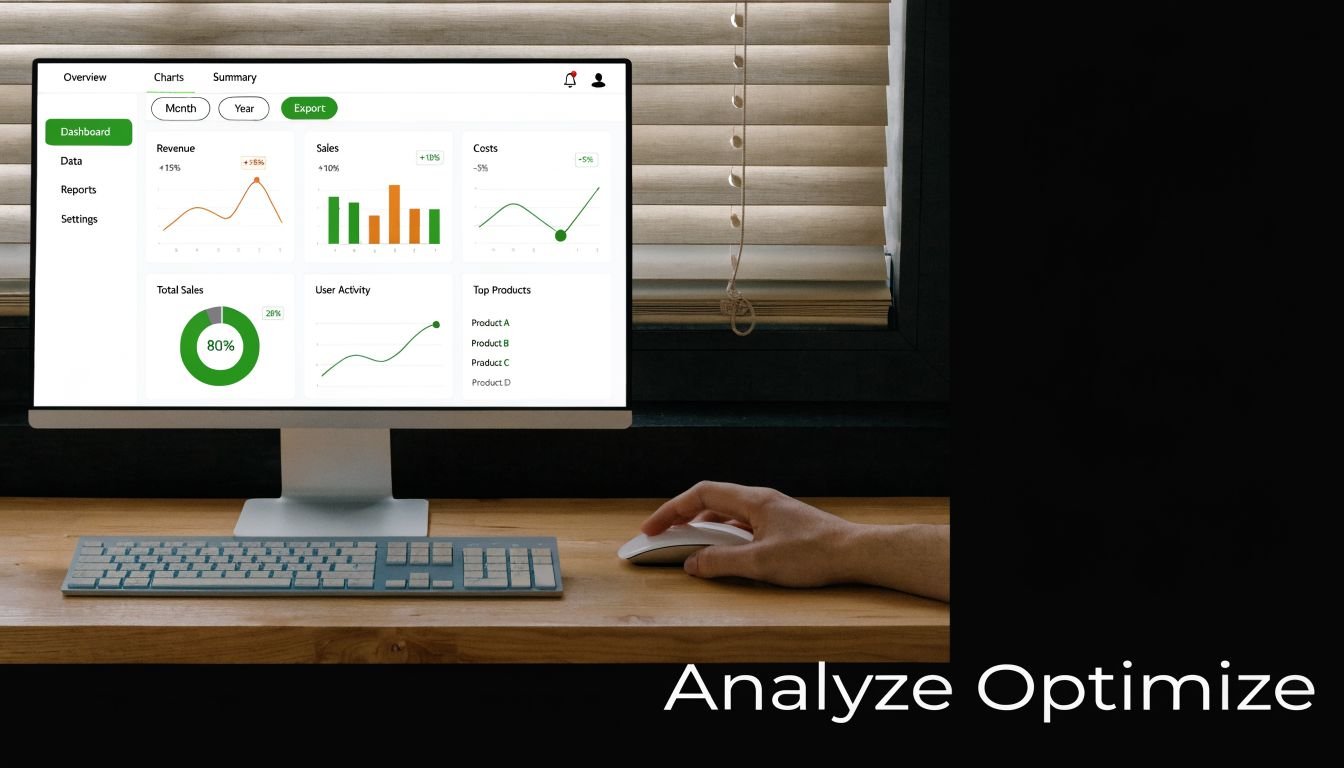
When a listing gets views but not favorites or sales, something usually breaks between search intent and listing promise. When a listing gets favorites but few purchases, price, shipping, or trust details may be slowing buyers down. When external traffic lands on your shop but not on product pages, your links may be too broad.
Check these areas regularly:
- Search terms that already bring qualified traffic
- Listings that get clicks but stall after the visit
- External sources that produce deeper engagement
- Seasonal shifts in what buyers respond to
What gets measured gets edited. What gets edited usually gets better.
Use one hub for every external campaign
A central bio link page solves a practical problem most Etsy traffic guides ignore. It gives you one place to organize external attention, update offers quickly, and track what people choose to click.
According to this 2025 bio link strategy video, bio link tools drove 40% more external referral traffic for e-commerce sellers. The same source notes that a single mobile-first page with product showcases and a shareable Tiny URL can turn scattered followers into a direct and measurable stream of Etsy buyers.
That’s useful because social traffic rarely has one intent. Someone from Pinterest may want a gift collection. Someone from TikTok may want the exact item in the video. Someone from Instagram stories may want your latest release. A central page lets you support all three without changing your entire profile setup every week.
This also reduces friction during launches. Instead of updating multiple bios, captions, and profile links across platforms, you update one hub and keep traffic moving.
What to adjust each month
A sustainable system doesn’t require constant reinvention. It requires regular pruning.
Review your setup monthly with questions like these:
- Which listings earned qualified traffic? Expand similar products or variations.
- Which social content brought the best clicks? Create more in that format.
- Which traffic sources bounced fastest? Tighten your landing path.
- Which campaigns were hard to manage? Simplify them through one central page.
- Which products deserve more exposure? Promote clear winners, not every listing equally.
The shops that grow steadily usually aren’t doing everything. They’re doing a few things repeatedly, measuring them accurately, and directing people through cleaner paths than their competitors.
If you want one place to organize all the social, content, and campaign traffic you’re sending toward your Etsy shop, Bio Links Page Builder makes that easy. You can build a mobile-first page for product links, launches, galleries, articles, and contact options without code, then update it fast whenever you run a promotion or release a new collection.