
Most advice on how to grow social media following is built around the wrong target. It tells you to post more, chase trends faster, and push every platform at once until the numbers move. That approach can inflate a follower count, but it often produces an audience that watches, scrolls, and disappears.
A stronger playbook starts somewhere else. Build an audience that knows what you do, trusts your point of view, and takes action when you ask. Followers matter, but only when they turn into repeat viewers, site visitors, email subscribers, leads, or buyers. If your social presence sends people into a mess of disconnected links and mixed messages, growth leaks out before it compounds.
That matters even more now because organic social is still the core growth channel for most brands. In 2024, 73% of businesses used organic social as a primary distribution strategy, and over half of Gen Z preferred discovering brands on social rather than traditional search, according to Sprinklr's social media marketing statistics. The opportunity is real. The lazy playbook is the problem.
Table of Contents
- Growing a Following Is the Wrong Goal
- Define Your Strategy Before You Post
- Create Content That Attracts and Retains Followers
- Turn Passive Followers into an Engaged Community
- Unify Your Brand with a Powerful Bio Link Page
- Measure Real Growth and Refine Your Approach
Growing a Following Is the Wrong Goal
A big audience that never clicks, replies, saves, shares, or buys isn't growth. It's decoration.
The main objective is to build a valuable audience, not just a visible one. That means attracting the right people, giving them a reason to stay, and making it easy for them to move from social attention into a deeper relationship with your brand. For a creator, that might mean podcast listens, newsletter signups, or bookings. For a small business, it might mean product views, inquiries, and repeat customers.
Social platforms reward behavior that looks like trust. People who comment, send posts to friends, save tutorials, and return for the next post tell the platform your account is worth showing. People who follow after one giveaway and never engage again do the opposite. I've seen smaller accounts outperform larger ones because their audience was aligned, specific, and active.
Practical rule: Don't ask whether a tactic gets more followers first. Ask whether it attracts the kind of follower you can serve repeatedly.
Most growth advice falls apart here. It treats social media as a top-of-funnel game only. In practice, the strongest accounts do five things well:
- They know who they're for. Their profile, topics, and offers are immediately clear.
- They post with intent. Each post supports a business goal, not just a reach goal.
- They create native content. They respect how each platform wants content to look and feel.
- They build conversation. They don't vanish after posting.
- They centralize attention. They give followers one clear place to go next.
That last point gets ignored too often. If your audience has to hunt through old posts, mismatched landing pages, and stale profile links, you're making growth harder than it needs to be. The fastest way to waste hard-earned attention is to scatter it.
Define Your Strategy Before You Post
Most stalled accounts don't have a content problem first. They have a clarity problem.
If you're serious about how to grow social media following in a way that lasts, document the strategy before you touch the content calendar. That's not bureaucracy. It's a filter for every post, campaign, and collaboration that comes after it.

A documented plan matters because 60% of marketers without one chase virality without purpose, and effective teams tend to prioritize 2 to 3 high-impact platforms instead of spreading themselves thin. The same analysis notes that engagement can drop 40% to 50% when brands run unfocused multi-platform strategies, as outlined by The CMO's guide to social media growth strategies.
Know exactly who you want to attract
Demographics aren't enough. "Women 25 to 34" or "small business owners" won't help you make sharper posts.
Build a practical audience profile around behavior:
- What problem are they trying to solve right now
- What kind of posts do they already engage with
- Which creators, brands, or publications do they follow
- What would make them click your bio link instead of scrolling
- What objection keeps them from buying, subscribing, or messaging
A useful audience profile sounds like this: "Freelance designers who want better clients, save practical pricing advice, watch short workflow videos, and need proof that a system will save them time." That gives you something to write for.
Tie content to business outcomes
Every account needs one primary business objective. Not ten.
If you're a local service business, social might support inquiries and booked calls. If you're an e-commerce brand, it might support product discovery and repeat purchase. If you're a writer, it might support article traffic and email growth. Once that's clear, your content gets easier to evaluate.
Use a simple planning lens:
- Awareness content brings new people in.
- Trust content shows your expertise, process, or perspective.
- Conversion content gives people a reason to take the next step.
If a post doesn't support awareness, trust, or conversion, it usually doesn't deserve production time.
Trend-chasing often fails for this specific reason. A trend can spike views while pulling in the wrong audience. If the viewers don't match your offer, your numbers rise and your business doesn't.
Choose fewer platforms and do them better
Trying to be active everywhere is one of the fastest ways to make your brand feel generic. Many teams don't need five active channels. They need a clear home base, a secondary growth channel, and maybe one support channel.
Use this decision criteria instead of copying competitors:
| Decision factor | What to check | Good sign |
|---|---|---|
| Audience fit | Does your target audience already spend time there? | You can name the communities, creators, or topics they follow |
| Format fit | Can you consistently make content that suits the platform? | Your team can produce native formats without friction |
| Business fit | Does the platform support your actual objective? | It can move people toward inquiry, click, signup, or sale |
| Resource fit | Can you sustain the workload weekly? | You can publish and engage without burning out |
A creator might choose Instagram and TikTok as growth channels, with LinkedIn as a trust channel. A B2B consultant might choose LinkedIn first and use Instagram selectively for behind-the-scenes authority building. A local café might prioritize Instagram and Facebook because both support local visibility and repeat reminders.
The point isn't to avoid expansion forever. It's to earn expansion after you've built traction somewhere specific.
Create Content That Attracts and Retains Followers
Follower growth usually stalls for a simple reason. The content may get attention, but it does not give people a clear reason to stay.
Accounts that grow steadily tend to feel organized. You can tell what they talk about, who they help, and what action they want people to take next. That consistency matters even more if social is feeding a bio link page, email list, product page, or booking funnel. If every post points in a different direction, the audience fragments and conversion drops.
Build around content pillars
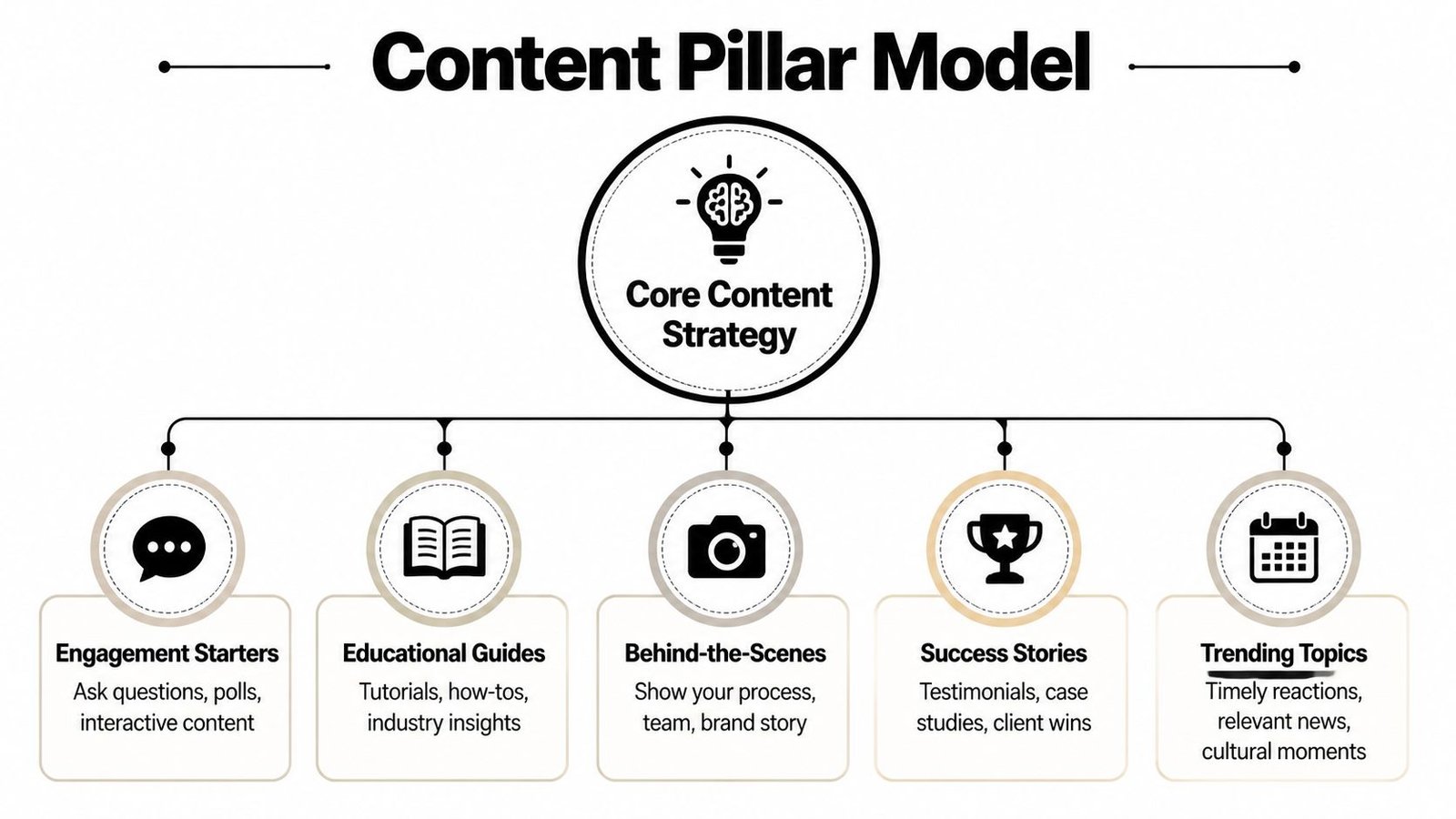
Content pillars solve two problems at once. They make content planning easier, and they train the audience to associate your account with a specific kind of value.
A practical setup usually includes a mix like this:
- Educational content for how-tos, breakdowns, tutorials, and answers
- Point-of-view content for opinions, mistakes, contrarian takes, and lessons learned
- Proof content for results, testimonials, process clips, before-and-after examples, or product use
- Personal or brand story content for behind-the-scenes material and identity
- Conversation content for polls, prompts, myths, hot takes, and audience questions
Each pillar has a job. Educational posts earn saves and shares. Point-of-view posts sharpen positioning. Proof content gives skeptical followers a reason to trust you. Story content makes the brand easier to remember. Conversation posts create feedback you can use in future content and offers.
The mistake I see often is pillar selection based on what sounds balanced on paper instead of what supports the business. A coach may not need frequent lifestyle content if discovery calls are driven by expertise and client proof. A product brand may need more demonstration and objection-handling content than founder storytelling. Good content architecture reflects the buying journey, not a generic template.
A useful media break belongs here because the format question matters just as much as the topic:
Match the format to the platform
The idea can stay consistent across channels. The packaging should change.
A tutorial that works as an Instagram carousel may perform better as a short LinkedIn text post with a stronger opinion, or as a TikTok video built around one mistake and one fix. Teams that repost the same asset everywhere usually get weaker results because each platform rewards different behavior.
Here is a practical format map.
| Platform | Primary Format | Secondary Format | Growth Tip |
|---|---|---|---|
| Short-form video | Carousels | Use Reels for reach and carousels for saves and profile visits | |
| TikTok | Short-form video | Photo post storytelling | Lead with a strong first second and speak to one clear pain point |
| Text post with structure | Document carousel | Turn expertise into clear opinions, lessons, and professional examples | |
| X | Short text thread | Single insight post | Post around timely conversations and reply while the topic is active |
| Native video or image post | Community prompt | Favor useful local, lifestyle, or community-relevant content | |
| Vertical visual | Idea-style tutorial graphic | Focus on searchable visuals tied to recurring problems |
One strong workflow is to build one core idea, then adapt it into platform-native versions. For example, a skincare brand can turn one customer objection into a Reel, a before-and-after proof post, a founder comment on common misuse, and a bio link click to a quiz or product bundle. One topic. Multiple entry points. A much better path to qualified growth.
Native beats duplicated. The message can stay the same. The packaging should fit the platform.
Consistency beats bursts
Irregular posting creates a weak signal. People may see one strong post, visit your profile, and find no pattern worth following.
Consistent publishing does not mean posting every day at any cost. It means setting a cadence your team can maintain while keeping the quality, format, and calls to action aligned. In practice, that usually comes from recurring themes, batch production, and a simple idea bank that tracks hooks, examples, objections, and next-step offers.
A simple weekly rhythm could look like this:
- One authority post that teaches something useful
- One proof post that shows your method, product, or result
- One conversation post that invites replies
- One short-form video adapted for the main platform
- Daily engagement windows to respond and initiate comments
The bigger trade-off is volume versus clarity. Publishing seven average posts that attract the wrong audience is worse than publishing three focused posts that bring the right people to your profile and then into your bio link page. Sustainable growth comes from repeatable themes, platform-fit formats, and content that leads somewhere useful after the follow.
Turn Passive Followers into an Engaged Community
A social account becomes valuable when people feel invited into it. Posting alone won't do that.
Many brands treat engagement like cleanup work after publishing. Reply to a few comments, drop a heart emoji, move on. That's too shallow. Community grows when you treat conversation as part of the content itself.
Stop broadcasting and start listening
A useful engagement model is simple: listen, respond, initiate.
Listening means more than checking your own notifications. Watch what your audience says in comment sections, competitor posts, community forums, DMs, and recurring questions. The language they use is often better than the copy in your draft posts.
Responding means answering with substance. Don't default to "thanks" or a fire emoji when someone asks a real question. Give a useful answer. Ask a follow-up. Pull the best replies into future content.
Initiating means creating openings for participation. That includes:
- Ask narrow questions instead of broad ones. "What's your biggest content challenge?" is weaker than "What slows you down more, ideas or editing?"
- Use unfinished opinions that invite response. Strong takes get comments when they leave room for disagreement.
- Turn recurring objections into prompts. If buyers hesitate around price, timing, or setup, make those topics discussable.
- Reward community behavior. Feature smart comments, thank contributors publicly, and reference follower ideas in future posts.
The strongest engagement often starts before you post. It comes from knowing what your audience is already trying to talk about.
This work compounds because it improves more than comments. It sharpens hooks, reveals objections, and gives you proof of what people care about.
Build a collaboration system, not random shoutouts
Most collaborations underperform because they're one-off and vague. One creator tags another, both post, and then nothing continues. That may create a temporary bump. It rarely creates durable audience transfer.
A better approach is an interconnected collaboration ecosystem. The strongest version involves recurring work with adjacent creators whose audiences overlap without competing directly. That could be a fitness coach and a meal-prep creator. A writer and a designer. A marketer and an e-commerce founder.
According to Gravital Agency's analysis of follower growth strategies, structured collaboration ecosystems can drive 300% to 500% more follower growth than solo efforts. The same research notes that working with 5 to 7 adjacent creators and using shared tracking can increase visibility by 4x to 6x through trust signals.
That only works when the collaboration is built like a system:
| Weak collaboration | Strong collaboration |
|---|---|
| One guest post | Recurring series across multiple accounts |
| Generic audience overlap | Clear niche adjacency |
| No shared CTA | Common theme and next step |
| No tracking | Shared naming, links, and performance review |
| One-sided exposure | Mutual value in each installment |
A practical example is a monthly theme. Five creators contribute one post each around the same audience problem, tag each other, and direct viewers to a common next action. Each account keeps its voice, but the audience sees a connected network instead of isolated content.
That's how follower growth turns into community growth. People don't just discover you once. They encounter you in a trusted cluster.
Unify Your Brand with a Powerful Bio Link Page
Most profiles lose momentum at the exact moment they should convert it. A follower gets interested, taps your bio, and lands in a mess.
Maybe the link goes to a homepage with too many choices. Maybe it points to last month's campaign. Maybe your newest article, product, booking page, and newsletter are all fighting for attention in different places. That friction kills intent.
Fix link scatter first
Your bio link should act like a focused bridge between social attention and meaningful action. Not a junk drawer.
Bio clickers are a high-intent audience. Data referenced by Grand River Agency's piece on growing social followings suggests that creators using consolidated bio link pages with multimedia blocks can see a 25% lift in follower retention and 3x higher conversion rates compared with cluttered link setups.
That doesn't mean every profile needs a giant menu. It means your page should reduce confusion and guide people based on what they came for.
What a strong bio page should include
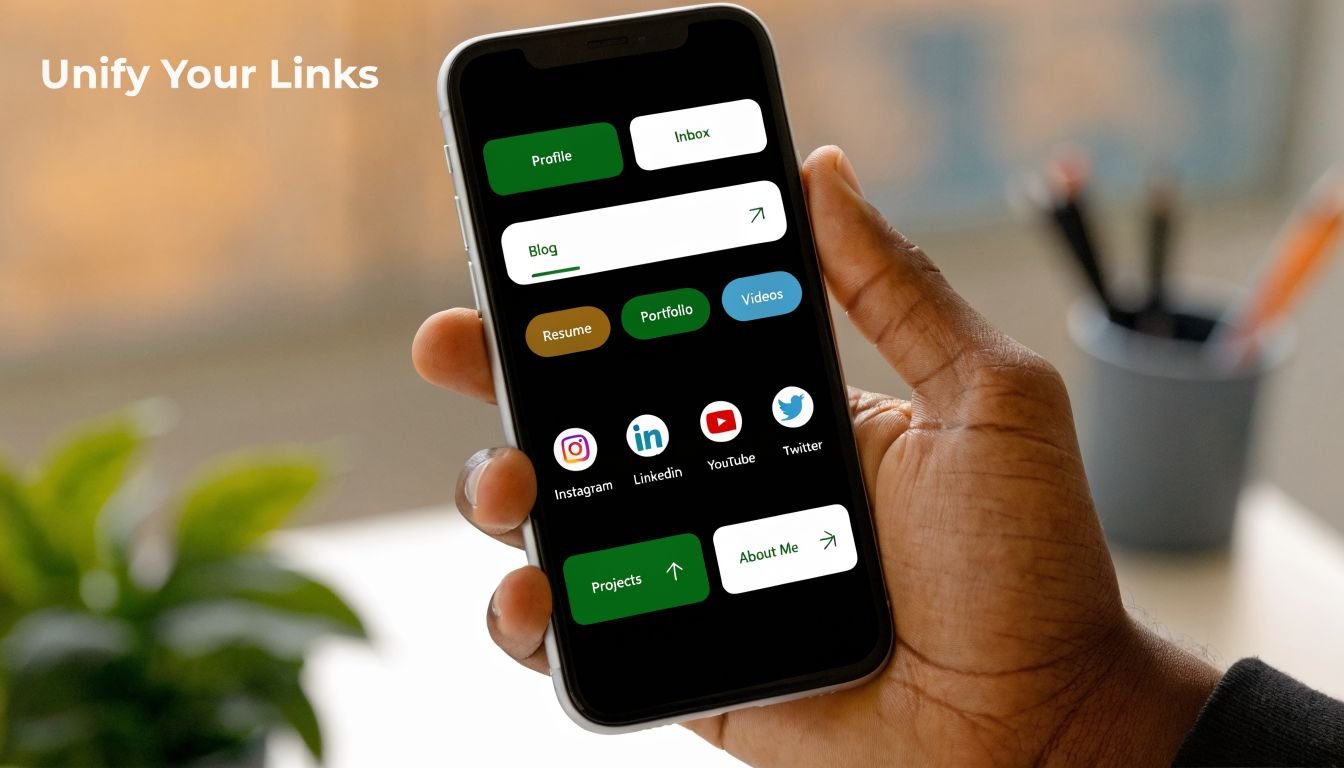
The best bio pages feel closer to a lightweight mobile landing page than a list of random buttons.
Use this checklist:
- A clear headline that says who you help or what you offer
- A short supporting line that sets expectation fast
- Primary call to action placed first, such as shop, book, read, listen, or subscribe
- Secondary paths for people who need a different next step
- Embedded media or visuals when they add context, such as a featured video, product gallery, or recent article
- Social profile links that reinforce your wider brand ecosystem
- Current relevance so seasonal offers, new launches, or active campaigns stay visible
A creator might lead with "Start here," then place newsletter, latest video, and product links underneath. A local service provider might lead with booking, then service list, reviews, map, and contact options. An indie seller might feature one collection first and move marketplaces or social channels lower.
A bio page should answer one question quickly: what should this person do next?
Make your bio page part of the content system
The biggest mistake is treating the bio link like a static admin task. It should change with your content priorities.
If you're running a series, feature that series. If one lead magnet is converting better than others, move it up. If a product launch is active, don't bury it below evergreen links that can wait. Your profile CTA in posts, Stories, Reels, TikToks, and comments should point to the same destination with the same promise.
This is also where centralization helps smaller teams. Instead of editing links across multiple channels every time something changes, you update one page and keep your social calls to action consistent. That gives your audience one habit to learn. Tap the bio. Find the next step. Move deeper into the brand.
Measure Real Growth and Refine Your Approach
If you only watch total follower count, you'll miss the signals that explain why growth is healthy or hollow.
A better measurement stack tracks three things: momentum, resonance, and action. Those tell you whether your account is attracting people, whether the content connects, and whether interest turns into behavior that matters.
Track momentum, resonance, and action
Start with these three metrics:
Follower growth rate
This shows whether your audience is expanding steadily or stalling. A rising total can hide the fact that momentum has flattened. Track growth month over month so you can spot whether your content and collaboration efforts are compounding.Engagement rate
This shows whether people care enough to interact. Look beyond likes. Comments, saves, shares, replies, and profile visits usually tell a better story about content quality and audience fit.Bio link clicks Bio link clicks demonstrate social's business value. If impressions go up but bio clicks stay flat, your content may be entertaining without creating intent. If clicks rise after certain topics or formats, that's a strong clue about what your audience wants next.
A simple review process each month works well:
- List your top-performing posts by saves, shares, comments, and clicks
- Group winners by theme so you can see which content pillars are pulling weight
- Check weak posts for patterns such as unclear hooks, wrong format, or weak CTA
- Adjust one variable at a time so you know what changed the result
- Update your bio destination to match current demand
A social dashboard can help, but you don't need a complicated reporting stack to do this well. Native analytics, a spreadsheet, and basic link tracking are enough to make stronger decisions if you review them thoroughly.
Use localized signals when your audience is not US-centric
US-centric advice breaks quickly when your audience is spread across regions or primarily local to one market.
For non-US or niche markets, standard assumptions about platform mix, timing, and content behavior often miss what works. According to UNDP's social media tips for nonprofit growth, organic growth in emerging markets relies 40% more on cross-platform repurposing, and localized timing can matter sharply, including an example of posting at 7 PM in Brazil for a 30% uplift.
That points to a practical habit. Review your data by location when possible. Compare how people in each market consume content, which platform sends stronger traffic, and what posting windows produce better response. If you're serving multilingual or regional audiences, localized decisions often outperform broad "best practice" calendars.
Good growth work is repetitive in the right way. You publish, observe, refine, and repeat. That's how social becomes a system instead of a guessing game.
If you want one clean place to turn social attention into clicks, subscribers, inquiries, and sales, build a focused OneURL with Bio Links Page Builder. It gives you a mobile-first bio page where you can organize links, videos, products, articles, galleries, and contact options without code, so the audience you worked to earn has an obvious next step.