
You find a name you like, type it into Instagram, and it’s gone. You try TikTok. Gone there too. LinkedIn has a variation, YouTube wants something else, and now your brand already looks split before you’ve posted a single thing.
That’s where most creators and small business owners lose momentum. They treat social media handles like a setup task instead of a brand decision. A handle isn’t just what people tag. It’s what they remember, search, share, and type into a bio link page when they’re trying to figure out if all these accounts belong to the same person or business.
Table of Contents
- Why Your Social Media Handle Is Your Digital Handshake
- How to Choose a Handle That Lasts
- Checking Your Handle's Availability Everywhere
- Claiming and Protecting Your Chosen Handle
- What to Do When Your Ideal Handle Is Taken
- Showcase Your Handles on a Bio Link Page
Why Your Social Media Handle Is Your Digital Handshake
A social media handle is often the first branded signal people see. Before they read your bio, watch your content, or visit your website, they see the name attached to your post, comment, or DM. If that name feels sloppy, inconsistent, or forgettable, trust drops fast.
Consistency matters because people rarely discover you in a straight line. They might see your Instagram Reel, search you on YouTube, then click your bio link from TikTok a week later. If your naming changes across platforms, they pause and ask a costly question: is this the same brand?
That pause hurts performance. Data cited in Bright Data’s summary of social handle standardization benchmarks says campaigns with consistent social media handles see 35 to 45 percent higher conversion rates for visits to centralized landing pages like bio links.
Practical rule: If someone has to think twice about whether two accounts belong to you, your handle strategy needs work.
A handle shapes recall and credibility
New creators often obsess over logos and colors first. Those matter, but your handle does more daily work. It appears in search bars, comments, mentions, podcast shout-outs, screenshots, email signatures, author bios, and pinned posts.
A strong handle usually does four things well:
- It’s easy to say: If someone can’t say it out loud on a call or in a video, it won’t spread cleanly.
- It’s easy to type: Avoid odd spelling, stacked underscores, or random numbers unless there’s a clear reason.
- It matches your positioning: A local bakery, a freelance designer, and a faceless education brand shouldn’t all follow the same naming logic.
- It can live everywhere: The best handle isn’t only available on one platform. It survives across your whole ecosystem.
Fragmentation makes you harder to find
Mismatched handles create friction that compounds over time. One platform uses your business name. Another uses your nickname. A third adds extra words because the original was taken. Each variation makes discovery a little weaker.
That’s why I treat handle selection as brand infrastructure. It’s not a vanity detail. It’s the naming layer that connects your platforms into one recognizable identity.
How to Choose a Handle That Lasts
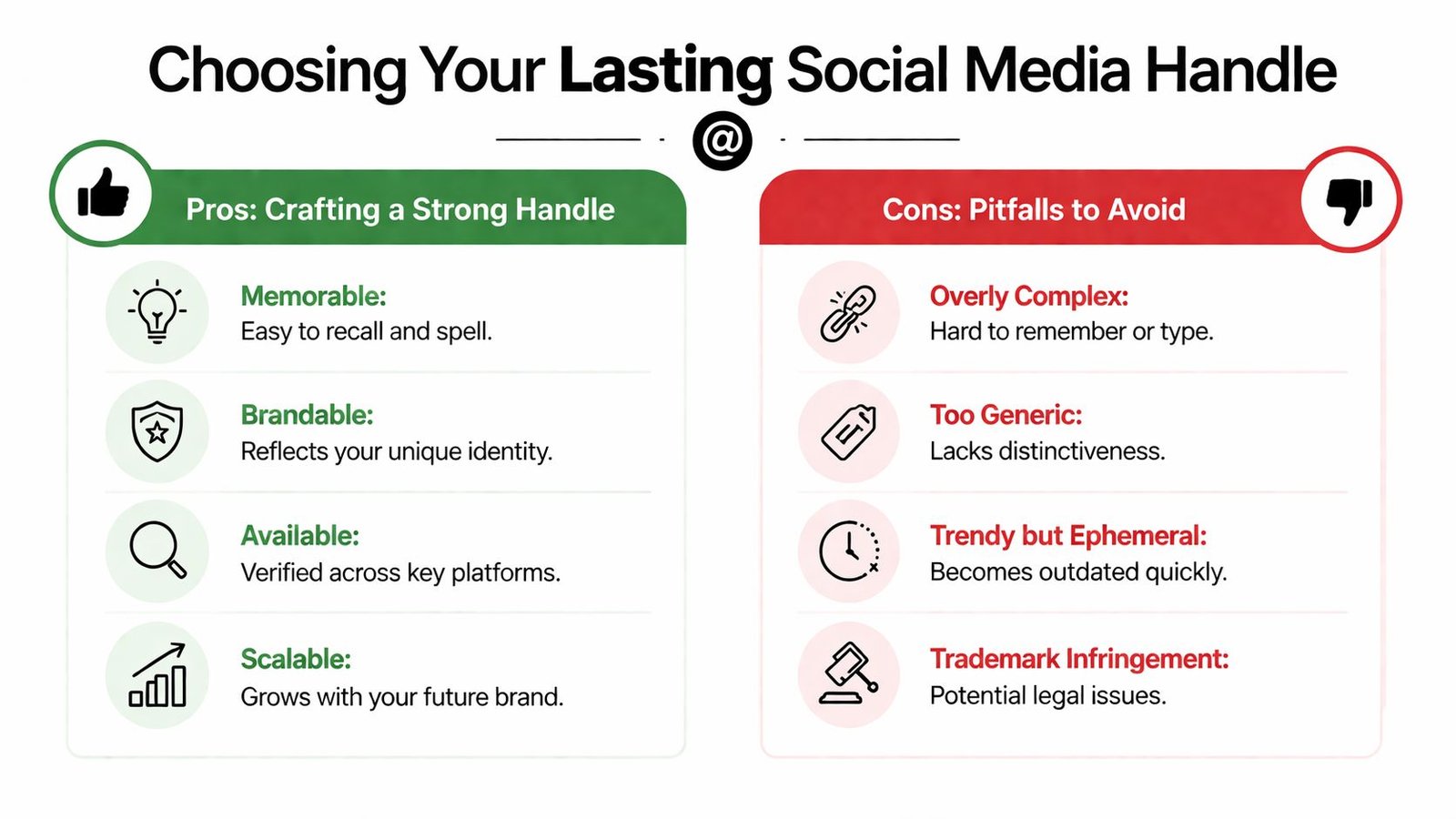
The best social media handles are boring in the right ways. They’re clear, durable, and easy to keep long after your first niche evolves. Trendy names feel exciting at launch, but they often age badly once your content broadens or your business changes direction.
Start with the brand you actually want to build
Don’t name yourself for your current content experiment if you already know you want a broader brand. A handle like @dailyreelsgrowth may box you in if you later expand into strategy, consulting, or education. A name with slightly more room usually ages better.
Use this quick filter before you shortlist anything:
| Question | Good sign | Warning sign |
|---|---|---|
| Can someone spell it after hearing it once? | Yes, likely | Needs explanation |
| Does it still fit if your niche expands? | Broad but relevant | Too narrow or trendy |
| Would it look credible on a bio link page? | Clean and branded | Cluttered or gimmicky |
| Can you imagine saying it in a podcast intro? | Sounds natural | Sounds awkward or childish |
Use a naming style that fits your role
Not every handle should follow the same pattern. The right format depends on whether you’re building around a person, a company, or a topic.
- Personal-name handles work well for consultants, writers, coaches, and founders. If your reputation is the product, use your name or a close version of it.
- Business-name handles fit local services, shops, agencies, and product brands. If customers are buying from the company rather than the individual, lead with the brand.
- Hybrid handles combine identity and function. Something like a name plus a specialty can work when the exact personal name isn’t available.
- Keyword-focused handles are useful when discoverability matters more than personality, especially in education, tutorials, or niche media.
A lasting handle usually sounds less clever than people expect. That’s a good sign.
Choose faceless handles with a clear promise
Faceless content is no longer a fringe approach. According to Shortimize’s analysis of low-competition niches for faceless accounts, the trend of faceless accounts grew 300 percent in 2025, and audiences in educational niches trust objective, problem-focused handles 40 percent more than personal names.
That has real implications for naming. If you run a niche account without showing your face, don’t force a pseudo-personal brand. Use a handle that signals the outcome people want.
Good faceless handle directions include:
- Problem-focused names:
@EcoSkinFix,@SeniorFitTips - Topic plus benefit:
@BudgetMealMaps,@CalmDeskHabits - Neutral educational brands: names that sound like a resource, not a personality
Faceless handles work when they feel credible, not anonymous in a suspicious way. Avoid names that sound spammy, autogenerated, or too broad to trust.
Keep the handle stable, even if the content changes
A few practical rules help here:
- Prefer one or two words when possible.
- Skip extra punctuation unless it solves a real availability issue.
- Avoid year markers like 2026 unless the account is temporary.
- Don’t bake in one platform such as “tiktok” or “insta” unless the brand exists only there.
- Check for trademark conflicts before you get attached.
The handle should still make sense if you add a newsletter, a storefront, or a bio link page later. That’s the definitive test.
Checking Your Handle's Availability Everywhere
The search phase gets frustrating because the internet is crowded. As of early 2026, there are 5.79 billion social media user identities worldwide, which is why finding a unique and consistent handle can feel brutally competitive, according to DataReportal’s social media user overview.
Use a two-pass check
Don’t rely on one username checker and call it done. I recommend a two-pass method.
First, run your shortlist through a username checker to scan the obvious platforms quickly. This gives you a rough map. Then manually verify each finalist inside the platforms that matter most to you. Platform search can reveal abandoned accounts, formatting quirks, or lookalike names that bulk tools miss.
A practical order looks like this:
- First pass: Use a handle checker for speed.
- Second pass: Search manually on Instagram, TikTok, YouTube, LinkedIn, X, Pinterest, and any niche platform relevant to your work.
- Final pass: Check domain availability and whether the same naming can appear in your email signature, author profile, and bio link.
Check more than the obvious platforms
A creator may care about Instagram and TikTok today, then need LinkedIn, GitHub, Pinterest, Reddit, or YouTube later. Small businesses do this too. A local service brand might start with Facebook and Instagram, then later add YouTube Shorts, WhatsApp, or a review-driven profile elsewhere.
That’s why “available enough” is often a trap. If your best handle is taken on one major platform, decide early whether you can live with a clean variation or whether you need a new root name.
Search for visual consistency too. A handle can be technically available while sitting next to confusing lookalikes that weaken your brand.
A simple spreadsheet helps. List each candidate handle in rows and each platform in columns. Mark exact match, close variation, or unavailable. This turns an emotional naming problem into a decision you can make.
Claiming and Protecting Your Chosen Handle
Once you find a handle that works, speed matters. Don’t wait until the weekend to clean up bios and upload profile photos. Claim the name first.

Claim first and optimize later
Create the account, secure the username, and document your login details. Even if you don’t plan to actively use every platform yet, reserve the handle on the major networks and any platform your audience might reasonably expect to find you on.
This is one place where perfection slows people down. You do not need the perfect banner, bio, or content plan before you register the name. A basic branded placeholder is better than losing the handle while you overthink your profile copy.
Use this sprint checklist:
- Register core platforms first: Focus on the places your audience already uses.
- Add basic brand markers: Profile image, short bio, and website or bio link.
- Save a record: Keep a secure list of every account, email, and recovery method.
- Reserve adjacent variants: If practical, secure obvious misspellings or short forms that could confuse people.
Protect the asset after signup
A social media handle becomes more valuable as your audience grows. Treat it like an asset, not a disposable login.
Set up two-factor authentication on every account. Use a password manager. Keep recovery emails current. If you work with a team or agency, control access carefully and avoid sharing one password around in chat.
This short walkthrough is worth watching before you hand account access to anyone else:
For businesses with a distinctive brand name, it’s also smart to ask a legal professional when trademark protection makes sense. Not every creator needs that step. But if the handle is tied to a commercial brand, product line, or growing business, it may be worth formal protection.
Secure the handle before you need it. Most regrets in branding come from waiting too long, not moving too early.
What to Do When Your Ideal Handle Is Taken
Many users hit this wall. The exact name is gone, and the replacements look messy. That doesn’t mean your branding is ruined. It means you need a variation that feels intentional, not patched together.
The frustration is widespread. Rhoddigital’s write-up on underserved market gaps cites Hootsuite sentiment analysis showing 45 percent of small business queries about handle synchronization went unanswered in 2025. A lot of owners are dealing with the same mess.
Use modifiers that sound intentional
The fix is usually not adding random numbers. It’s choosing a modifier that preserves the brand while keeping the name clean.
Good modifier options include:
- Business markers:
hq,studio,co,shop,app - Location markers: useful for local brands if geography is part of the value
- Action-led formats:
getbrand,joinbrand,trybrand - Professional clarifiers: a specialty or descriptor that helps users understand what you do
Examples of workable upgrades:
@northharborbecomes@northharborco@milanodesignbecomes@milanodesignstudio@formwellbecomes@getformwell
Avoid fixes that create a bigger branding problem
Some alternatives solve availability but create confusion later. Be careful with these:
- Random digits: They weaken recall unless the number is part of the actual brand.
- Multiple underscores: Hard to say, hard to type, easy to forget.
- Extra words with no meaning: If the added word doesn’t clarify the brand, it’s just clutter.
- Platform-specific nicknames: A joke name on one network often becomes a problem once people search for you elsewhere.
Here’s the trade-off I usually give clients. If one clean modifier creates near-consistency across platforms, keep the root name and move on. If every platform requires a different workaround, scrap the root and choose a stronger core handle.
A taken handle isn’t the real problem. A weak substitute repeated across five platforms is.
When you settle on a variation, use the same one wherever possible. If exact uniformity isn’t available, keep the difference minimal and predictable.
Showcase Your Handles on a Bio Link Page
Even with careful planning, many brands end up with one or two handle variations. That’s normal. The smart move is giving people one place where all your profiles live under a single identity.
Turn scattered profiles into one clear identity
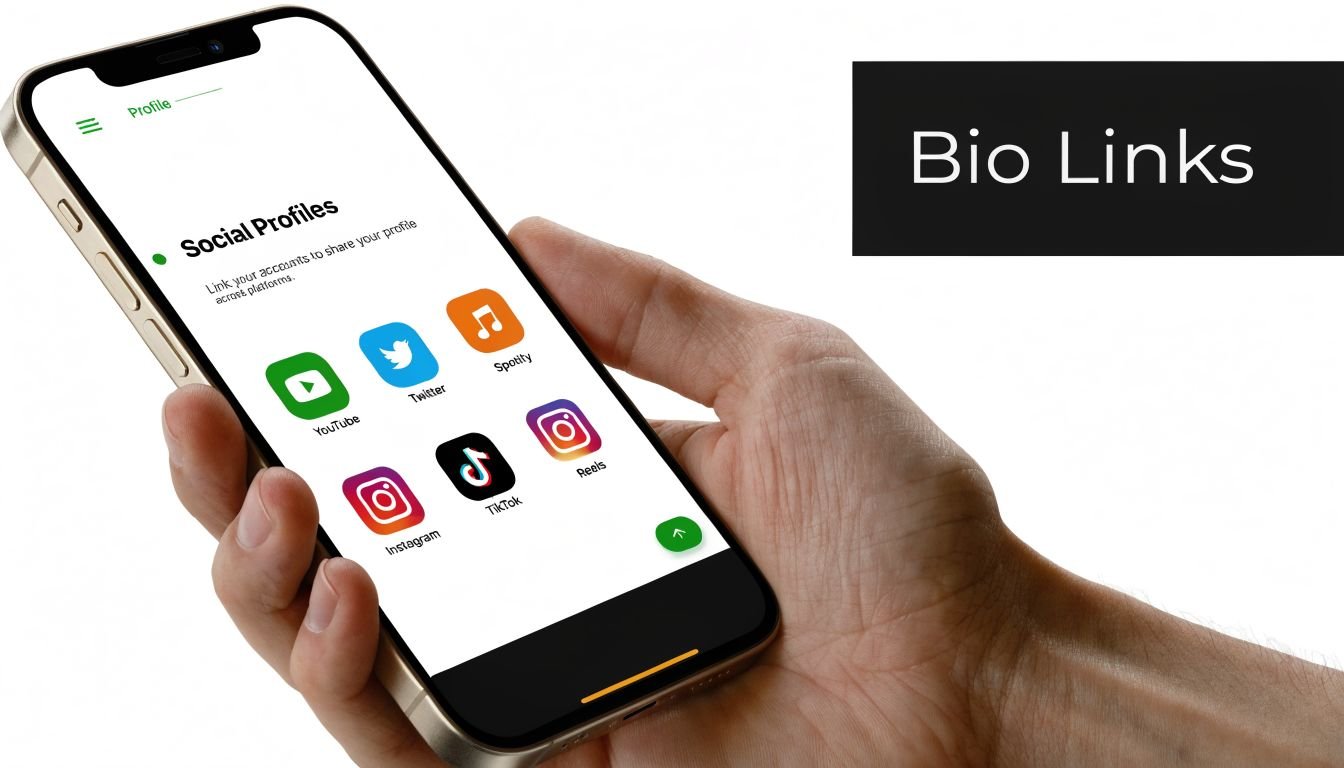
A bio link page fixes a basic discovery problem. Your audience doesn’t want to guess whether @brand, @brandhq, and @shopbrandco are all you. They want one trusted destination that confirms the connection.
That’s why handle strategy and bio link strategy belong together. A bio link page acts as the bridge between platforms. It lets you present your preferred brand name once, then route people to every active profile, store, article, video, or offer without making them hunt.
The upside isn’t only cosmetic. Studies summarized earlier report that standardizing social media handles on a bio link page can boost clicks by 27 percent, and campaigns using that approach see 35 to 45 percent higher conversion to page visits, as cited in the earlier Bright Data benchmark reference.
What a strong bio link page should include
A weak bio link page is just a pile of buttons. A useful one reinforces identity.
Include elements like these:
- Primary brand name: Use the handle or brand wording you want people to remember.
- Platform labels: Don’t make users guess which icon goes where.
- Short context: A line that tells people what you publish or sell.
- Priority destinations: Lead with your most active platform, current offer, or key content.
- Visual consistency: Profile image, colors, and naming should match your accounts closely.
A good bio link page also helps when your handles can’t match perfectly. Instead of apologizing for inconsistency, you create a clean front door. One memorable link does the sorting for the user.
Keep the page maintained
This part gets ignored. If you change a handle, update the bio link page immediately. If a platform becomes inactive, remove or deprioritize it. If you launch a newsletter, shop, or new content series, feature it clearly.
The page should answer one question fast: where should this person go next?
When it does that well, your social media handles stop feeling like scattered usernames and start functioning like a real brand system.
If you want one clean place to organize mismatched profiles, content links, products, and social destinations, try Bio Links Page Builder. It gives you a simple OneURL you can share everywhere, so your audience can find the right account without guessing.
Pingback: How to Get More Social Shares: Proven Strategies for Rapid Growth – Bio Link Builder Platforms